
Deed Types in Perry County
Every deed entry in Perry County identifies the parties, the filing date, the document type, and a book/page citation. Many instruments also state the consideration and carry a legal description. That description, more than any street address, tells you whether two records concern the same tract. Names alone can mislead.
The Clerk records far more than deeds. Mortgages, assignments, releases, liens, easements, plats, powers of attorney, and wills all pass through the office. A mortgage or lien burdens land without moving title. A release shows a recorded claim was satisfied.
| Deed Type | What It Does | Common Use |
|---|---|---|
| General warranty deed | Conveys title with broad covenants | Ordinary sale |
| Quitclaim deed | Conveys only the interest held | Family or title cleanup |
| Executor or fiduciary deed | Conveys through authorized estate action | Probate transfer |
| Master commissioner deed | Records a court-directed conveyance | Judicial sale |
| Tax-related deed or certificate record | Documents part of a delinquent-tax trail | Tax enforcement research |
Labels do not settle legal effect. Read the full instrument, its acknowledgments, exceptions, and attachments. To build a chain of title, connect each grantee to the next grantor and keep every citation along the way.
Perry County Clerk Records Center
The Perry County Clerk is the county recorder. Its Records Center at 481 Main Street, Suite 102, Hazard, is open Monday through Friday from 8 a.m. to 4 p.m. The office phone is (606) 436-4614. Public-counter access remains important for volumes or images missing online.
The newer Online Land Records page directs users to eCCLIX and also names electronic-recording vendors and DocAlert. Older FAQ language is less clear about online documents, so rely on the current route and confirm the county and date coverage before paying.
The captured Clerk page shows that official entry.
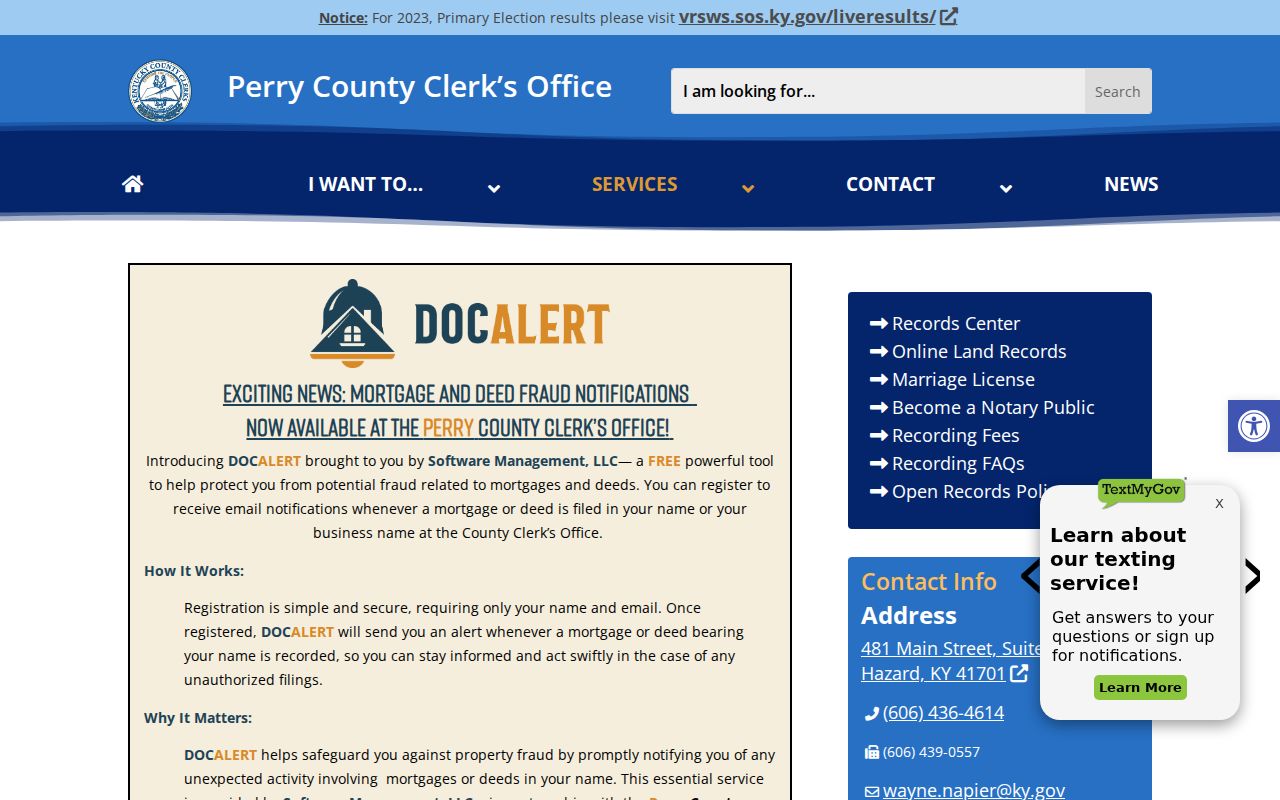
That official Clerk entry names the custodian, even when the eCCLIX result view itself requires a registered session.
Perry County eCCLIX Index Fields
eCCLIX searches the Clerk's indexed land records. Documented controls cover county, party role, party name, document type, book and page, and recording dates. There is no direct tax-lot, bill-number, or street-address query. Start with the PVA to turn an address into an assessed owner and legal description, then carry those details into the deed index.
| Index field | What to enter | Why it matters |
|---|---|---|
| County | Perry | Keeps the result in the right jurisdiction |
| Grantor | Seller or conveying party | Finds outgoing interests |
| Grantee | Buyer or receiving party | Finds acquisition deeds |
| Document type | Deed, mortgage, lien, release, plat | Reduces broad name hits |
| Book/Page | Known citation | Retrieves a cited record |
| Date range | Likely recording period | Separates repeat names |
Data reloads overnight. A freshly indexed record may lack its image for a day. Recheck the next morning. If the image still has not appeared, ask the Clerk directly. Online access can carry daily or subscription fees. The public terminal offers the same basic search at no charge.
Perry County Grantor-Grantee Chain
A chain of title is the ordered line of conveyances affecting one tract. Start with the newest known owner and work backward. Each deed should repeat enough legal text, or cite a prior recording, to tie it to the same land. Names alone are weak proof. This is especially true with common surnames, estates, trusts, and companies in the mix.
- Find the current assessment owner, then search that name as grantee in the deed records.
- Open the most recent likely deed and verify the legal description, date, and parcel clues.
- Copy its grantor, then search that prior party as a grantee to find the earlier acquisition.
- Repeat the process while logging each book/page, date, deed type, and name spelling.
- Move to courthouse volumes or archives when the online index ends.
- Grantor
- The party conveying an interest.
- Grantee
- The party receiving an interest.
- Chain of title
- The linked sequence of recorded conveyances for one tract.
- Book/Page
- The volume and page used to retrieve an older recorded item.
- Instrument reference
- A filing identifier used where the index supplies one.
Perry County Online Coverage Cutoffs
According to the Clerk FAQ, the online index reaches back to 1993, and images go as far back as 2000. The Records Center also describes county land records dating to the late 1700s. Those are different layers. Neither date promises that every old page is online.
A deed records search can therefore cross the online index, the image collection, courthouse ledger books, and archival copies. Before a visit, write down the oldest confirmed grantee, a possible recording year, book and page, community name, and land description. Staff can retrieve a record. They will not render a title opinion.
Coverage check. Confirm Perry County, document type, earliest indexed date, and image availability in eCCLIX before buying access.
Note: The online index date and online image date are separate limits.
Older Perry County Deed Books
Perry County was created in 1821. Older land relationships may reach into predecessor counties or early local books. The FamilySearch Perry land-record catalog covers land records from 1821 to 1964. A second catalog holds deeds from 1818 to 1901 plus a general index through 1913. These catalogs are finding aids, not substitutes for the record itself.
The Kentucky Department for Libraries and Archives keeps original and microfilm county records. It publishes deed research guidance as well. Its Frankfort research room is open Monday through Thursday, 9 a.m. to 3:30 p.m., with appointments encouraged. Cite the actual deed image or certified copy in any final chain.
Historic geography matters too. Buckhorn Lake construction displaced Bowlingtown, along with homes, road segments, and cemeteries. When a modern parcel label dead-ends, search the older tract and community names instead.
Perry County Recording Fees
The Clerk publishes a local fee table. The listed base charge is $50 for a deed. Extra pages cost $4 each after the first five. A deed of contract runs $66. A corrective deed is $46, and an easement or plat is $50 each. Statutory details or added pages can shift the total. Mortgage and lien categories use different amounts and page thresholds. Verify the live schedule before filing or ordering. Recording fees are not the same as online subscription fees, image-print charges, or certified-copy costs.
The official Perry recording-fee table lays out each row by instrument.
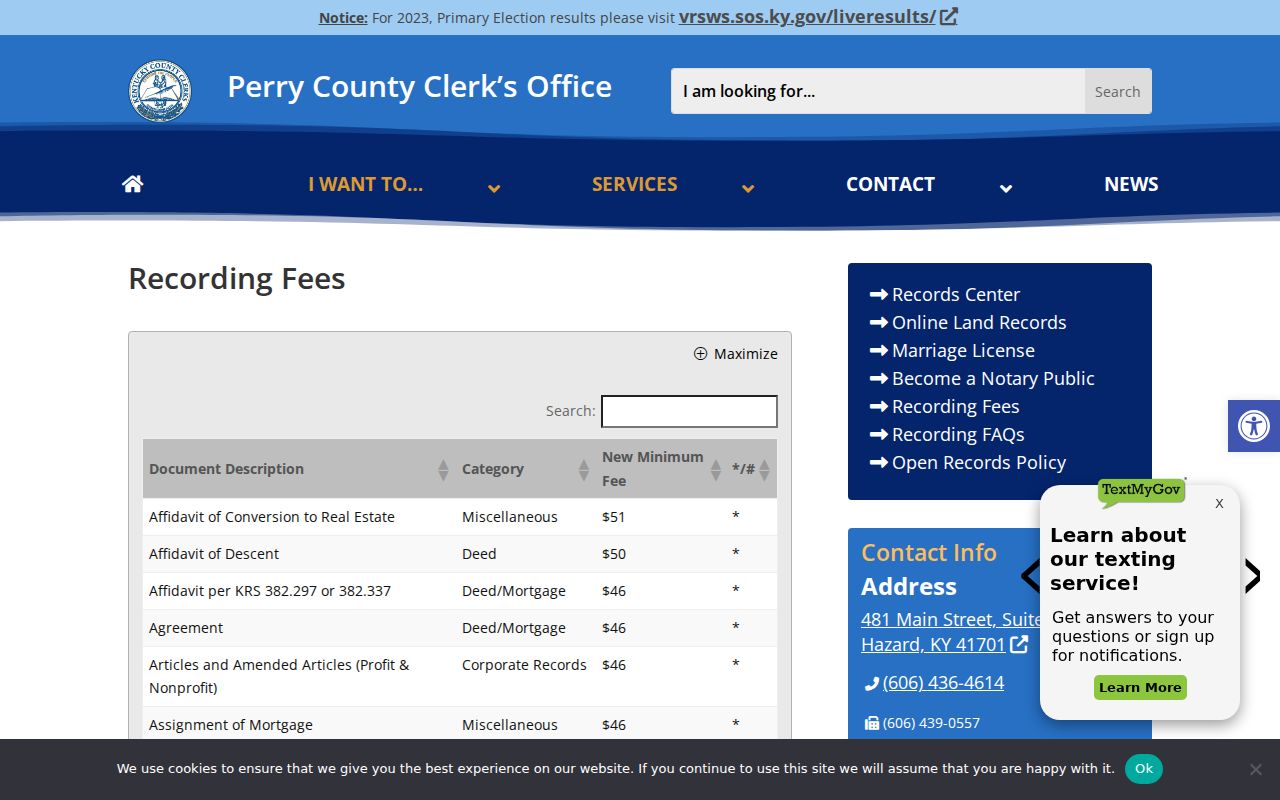
Always match the current row to the exact instrument rather than applying one deed fee to every land filing.
Perry County Liens and Releases
Deeds are only part of the story in Perry County property records. A careful title search also covers mortgages, assignments, releases, mechanic's liens, federal and state tax liens, easements, subordination agreements, and court notices. Each of these touches the land. Match every release to its original instrument by party names and reference number. That step keeps the chain honest.
A filed lis pendens warns of litigation over real estate. The notice itself appears in the deed records. But the underlying foreclosure, quiet-title, partition, or lien-enforcement file lives with the Perry Circuit Clerk rather than eCCLIX. Reading both gives you the dispute and its outcome.
An unreleased mortgage is not proof of an unpaid debt. Spelling errors, assignees, book and page citations, and later releases can all hide the connection. Check each of those angles before drawing conclusions. For a live transaction, bring in qualified title help.
Perry County DocAlert Service
DocAlert is a free early-warning service from Perry County for new deed and mortgage filings. Registration just takes a name and an email address. Add every legal name variant likely to show up in the index. Coverage improves when spellings match.
Alerts arrive after a matching instrument is filed. They do not block recording. They cannot prove a filing is false, catch every spelling, or insure title. Open the recorded item quickly, and contact the Clerk if anything looks unfamiliar.
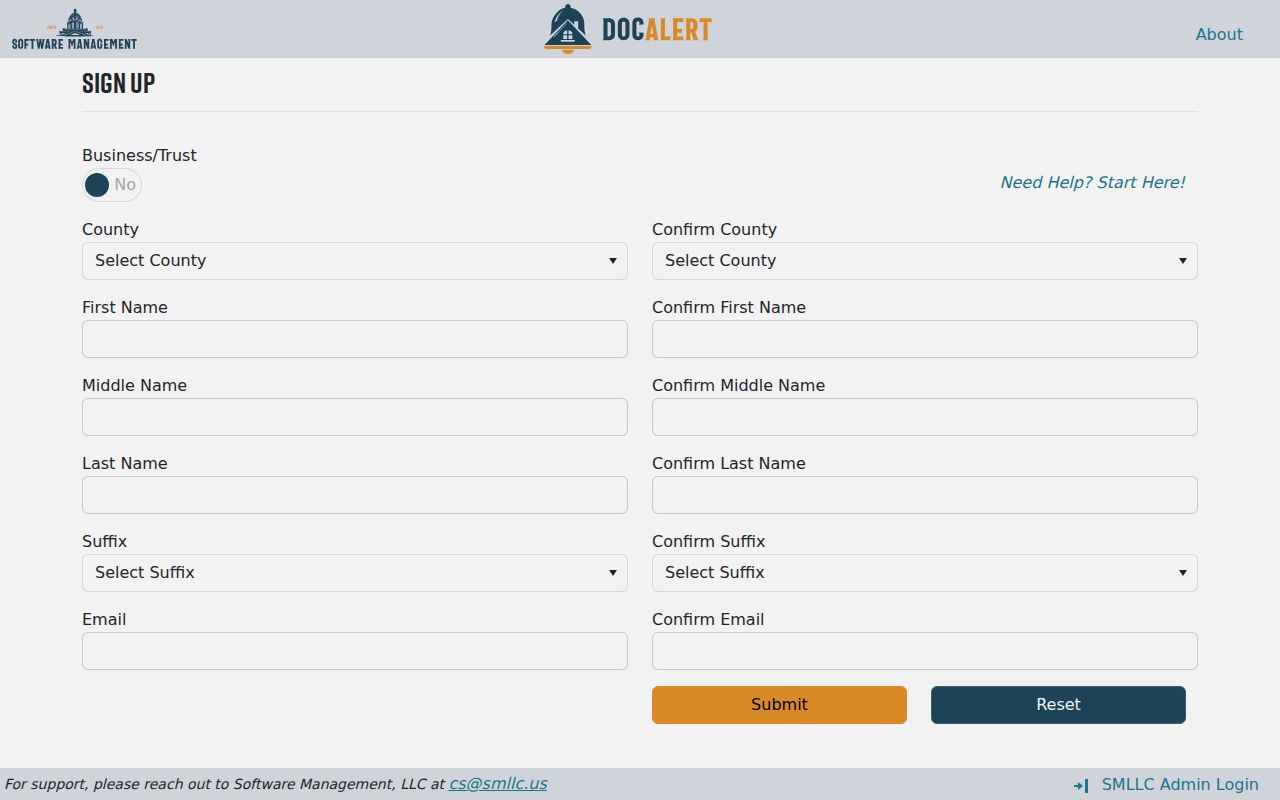
Note: An alert only signals that review is needed, not that the land record is safe or complete.
Copies of Perry County Deeds
Perry County deeds can be reached several ways. View one through eCCLIX when the image is posted. Pull it at the Clerk's public computer or counter. Order it from the Records Center. Supply the party names, recording date, document type, and the book/page or instrument reference. A precise citation avoids paying for the wrong image.
The current Records Center page prices mailed real-estate and tax-bill copies at 25 cents per page. It adds $2 postage and handling per request. An older open-records policy sets different rates. Ask the Clerk which schedule applies and whether certification costs extra. For a plain research copy, electronic delivery may be the simpler route.
Recorded, not guaranteed. Perry County deed records show instruments accepted for recording. They do not establish that title is clear, settle every boundary, or reveal an unrecorded interest.
A certified copy confirms the Clerk's version of the recorded instrument. It says nothing about the deed's legal validity. A purchase, an estate, or a dispute can raise real questions. A Kentucky attorney or title professional should read the full chain and its exceptions.
When an online image is missing, figure out the source of the problem. Is it the index or the scan? The index may list a deed the system has not yet imaged. eCCLIX support suggests checking again after the overnight reload. Still nothing? Give the Clerk the county, party names, document type, and record date. Include the exact book/page or instrument citation. That detail lets the records desk pull the right filing instead of guessing from an address.
A deed record may not be supplied over the counter. The Kentucky Open Records Act offers another route. Describe the instrument clearly and request electronic delivery when practical. Agencies generally get five business days to respond or explain a delay. The Act does not obligate staff to run a chain-of-title search or answer legal questions.
Old deeds deserve extra care. Copy every marginal note and prior-book reference on the page. Those notations can point somewhere useful. They may lead to a release, corrective instrument, plat, will, or earlier conveyance in another volume. Keep the envelope, certification, or download date with your copy. Its source should stay clear years later.